
Wednesday, August 6, 2008

Wednesday, April 16, 2008
Regarding Set Theory
Set theory is a branch of mathematics that deals with a collection of objects called sets. The idea of a set, a collection of objects, is not limited in Set Theory theoretical mathematical theories or ideas, but it can be applied to other objects that do not have much to do with the field of mathematics. The idea of Set Theory becomes one of the most important ways that we can analyze complex concepts of mathematics. One of the most notable concepts of Set theory was that it treated infinite sets within the field of mathematics.[1] He treated the infinite sets on par with the finite sets.[2] This idea of set theory was met with much criticism because it was not common it was not, until George Cantor, common for people to consider the actual infinite.[3] There are many benefits to Set Theory, and they will be discussed. At the same time, there are paradoxes that must be discussed along with how they are a problem for set theory and how they have helped it grow and evolve from its humble beginnings.
A BRIEF HISTORY
The origins of Set Theory
The original concepts of infinite as we now understand it originates from Ancient Greece.[4] These inquiries continued throughout the Middle Ages and onto the nineteenth century, it was in this time that Bolzano, a philosopher and mathematician, gave some consideration to sets. He defined sets as “an embodiment of the idea or concept which we conceive when we regard the arrangement of its parts as a matter of indifference.” He disagreed with most and said that infinite sets can exist. According to him, the relationship between an infinite set and its members was that there was a correspondence between parts of the infinite set and the infinite set itself.[5] He also proved that real numbers weren’t countable-they were infinite.
The works of Bolanzo did not lead to the founding of Set Theory proper. The origins of Set Theory come from the works of Georg Cantor, who showed the real line is not countable, that it is infinite. He also came up with the idea that the concept of infinity comes in various sizes. The real motivational factor that set the stage for Cantor was his work on Fourier series. From this he showed that transcendental numbers, which are a subset of Fourier series, were plentiful.[6] He also proved that real numbers are not countable.[7] Cantor did, however, face great opposition to his theories from the leading figures of his time. Leopold Kronecker (1823 – 1891), one of the most famous mathematicians of the time, was among those who opposed these ideas. He believed that constructive mathematics only mattered, and accepted only finitely constructible mathematical objects. All this criticism did not stop this great mathematician from going forward. He even extended a one of his theories. In this, the theory of order types, ordinal numbers were a special case. Cantor’s last work on set theory was a treatise in 1897.[8]
Paradoxes regarding Set Theory
The first paradox in set theory appeared in 1987. Discovered by Burali-Forti, this paradox stated an ordinal number of set A that contains all ordinals must be an ordinal and this is a contradiction. Cantor later discovered another paradox dealing with the set that contains with in it all other sets. The cardinal number of the set of all sets must be the greatest cardinal, but that doesn’t make sense, since the greatest cardinal must necessary be part of the set.[9]
The most well know paradox involves Bertrand Russell. Russell showed inconsistencies of set theory then known and invented by Gottlob Ferge. The later had developed a system of logic that used something that he called the unrestricted comprehension principle. It was through this, that it becomes possible to form a set that meets all the conditions required of it. The problem with this that Russell discovered was that was that it allowed for sets to exist that were not members of them.[10] The set can not be a member of itself, but because of that very fact, it is a member of itself.[11]
Answer to these perplexities came by axioms, now known as the Zermelo-Fraenkel axioms (ZF axioms) listed in the table to the left. These do not permit the comprehension principle to create sets that themselves are larger than previously existing sets. Because of this, there is no universal set according to the ZF axioms.[12] There are ten axioms that are considered ZF axioms, and they are: 1) the axiom of extension, 2) the axiom of the empty set, 3) the axiom of separation, 4) the axiom of pairing, axiom of union, 5) the axiom of union, axiom of power set, 6) the axiom of schema seperation, 7) the axiom of infinity, 8) the axiom of choice, 9) the axiom of replacement, 10) the axiom of choice separation. All of these are shown and briefly explained in the above table. (Source for the table: http://www.britannica.com/EBchecked/topic/513243/Russells-paradox.)[13]
BENEFITS OF SET THEORY:
1. General
Regardless of some of the problems proposed by paradoxes in set theory, we can not underestimate the importance of this idea in the field of mathematics. It is because of this that we can see such things as the cardinality of sets, that there can be a one-to-one matching between an infinite set and a subset off that infinite set that is also infinite.[14] This becomes important in theoretical discussions and disproves the statement that the whole is bigger than its parts. The aforementioned statement is only true for finite sets. One could say that a whole pizza pie is bigger then its members, a slice o it. But it is wrong to say that the set of all rational numbers is, for example, bigger than the set of all even or odd numbers. This is so because each of these sets extend infinitely onwards and because of that the latter two are just as big as the former even though the former set contains within it the latter two sets. In addition to this, the various mathematical equations related to set theory allow us to see how exactly sets work with each other.
2. Benefits of ZF axioms
a. In General
There are some general benefits to the ZF axioms that should be discussed. They are:
The Axiom of Extensionality allows us to show that when two sets contain the same members, they are the same exact set. For example, set A= {Sarah, Sam} set B contains {Sarah, Sam}. This shows us that set A=set B because they have the same exact members.[15]
The Axiom of the Empty Set shows that there can exist a set that has no members in it. For example, the set of all real living things that are unicorns is an empty set because there are no real living things that are unicorns.[16]
The axiom of union shows that there is a union between a set and itself. This can also be used to show how to combine members of two sets. For example, if set A = {1,2,3} and set B= {2,3,4} then the union of set A and set B would be {1,2,3,4}.[17]
The Axiom of Power Set shows us that for any set, there exists another set that contains within it, all the subsets of the previous subset.[18]
b. The Axiom of Choice
The Axiom of Choice, as explained in the table, states that “If A is the set of elements that are nonempty sets, then there exists a function f with domain A such for member B of A, f(B) is a member of B.”[19] To put this simply, if you have different bags each containing at least one thing in them, then it is possible that one can create a set such that it only includes one member from all the other bags. This could be the case even if there were an endless number of bags to choose from. [20] This is one interesting application of set theory because, according to this, if it were true, then a proof that utilizes the axiom of choice is nonconstructive. This proof shows that an object exists, but since the object is not in a particular set, it can not be defined. The axiom of choice also produces things called intangibles.[21]
Yet what the Axiom of Choice shows is important, because it shows that sets themselves can be combined in other ways than those presented in the table in footnote 15. It shows that there are other ways to organize sets than those that are commonly talked about. We can talk about and combine sets without using formulas like that of union and intersection.
CONCLUSION
Set theory, a branch of mathematics, is a relatively new field of math that studies collections of objects. The collection of these objects are called sets. First proposed by Georg Cantor, there are many different applications of set theory that, that include different formulas. But, as stated above, there are some paradoxes that arise out of Cantor’s original set theory like Russell’s Paradox. But, advancements in Set Theory have given possible answers to this. All in all, it can be stated that the totality all that can be encompassed in Set Theory have shown many benefits. They allow us to talk about infinity and its various properties, while axioms that were produced as a response to Russell, like the Axiom of Choice, have made also have benefits to them. All in all, it can be said that set theory has become an indispensable part or mathematics and it has been shown to posses many beinifits.
[1] An infinite set is a set that has no limit to the number of members it possesses. For example, one could say set A is a set of all x such that x is a natural number. This, symbolized as A={x│x is a natural number}. This set would include all natural number. Since there is an infinite number of natural numbers, the set containing all natural numbers would be an infinite set.
[2] A finite set is a set that has a limited membership. For example, set A, the set of the presidents of the United States of America up to George Bush, is a finite number. This would be symbolized as A ={x│x is a president of the United States of America up to George Bush}.
[3] "Set theory." Encyclopædia Britannica. 2008. Encyclopædia Britannica Online. 13 Apr. 2008 <http://www.britannica.com/EBchecked/topic/536159/set-theory>.
[4] “The idea of infinity had been the subject of deep thought from the time of the Greeks. Zeno of Elea, in around 450 BC, with his problems on the infinite, made an early major contribution. By the Middle Ages discussion of the infinite had led to comparison of infinite sets. For example Albert of Saxony, in Questiones subtilissime in libros de celo et mundi, proves that a beam of infinite length has the same volume as 3-space. He proves this by sawing the beam into imaginary pieces which he then assembles into successive concentric shells which fill space.” Source http://www-groups.dcs.st-and.ac.uk/~history/HistTopics/Beginnings_of_set_theory.html
[5] For example, take the following sets into consideration: 1) A={x│x is a natural number}, and 2. B ={x│x is an odd number}. The members of Set A would be all the natural numbers ({1,2,3,4….}) while the members of set B, a subset of set A, would be all the odd numbers ({1,3,5,7…}) There is no limit to both sets, and thus there is a one-to-one correspondence between them. This is only possible if set A and B are both infinite sets.
[6] Source: http://plato.stanford.edu/entries/set-theory/
[7] As mentioned in the Stanford Encyclopedia of Philosophy “His famous proof went as follows: Let us call an infinite set A countable, if its elements can be enumerated; in other words, arranged in a sequence indexed by positive integers: a(1), a(2), a(3), … , a(n), … . Cantor observed that many infinite sets of numbers are countable: the set of all integers, the set of all rational numbers, and also the set of all algebraic numbers. Then he gave his ingeneous diagonal argument that proves, by contradiction, that the set of all real numbers is not countable. A consequence of this is that there exists a multitude of transcendental numbers, even though the proof, by contradiction, does not produce a single specific example.” (Source: http://plato.stanford.edu/entries/set-theory/)
[8] Source: http://plato.stanford.edu/entries/set-theory/
[9] Source: http://plato.stanford.edu/entries/set-theory/
[10] This would be translated into {x x ∉ x} which means the set of all x such that x is not a member of itself. This appalling contradiction includes sentences like “This sentence is false.” For the first statement to be true, it must be false.
[11] "Russell’s paradox." Encyclopædia Britannica. 2008. Encyclopædia Britannica Online. 14 Apr. 2008 <http://www.britannica.com/EBchecked/topic/513243/Russells-paradox>.
[12] "Russell’s paradox." Encyclopædia Britannica. 2008. Encyclopædia Britannica Online. 14 Apr. 2008 <http://www.britannica.com/EBchecked/topic/513243/Russells-paradox>.
[13] It is important here to note that there was another method of solving this problem that did as discovered by Willard Van Orman Quine. “In his paper “New Foundations for Mathematical Logic,” the comprehension principle allows formation of {x ϕ(x)} only for formulas ϕ(x) that can be written in a certain form that excludes the “vicious circle” leading to the paradox. In this approach, there is a universal set.” (Source: "Russell’s paradox." Encyclopædia Britannica. 2008. Encyclopædia Britannica Online. 14 Apr. 2008 <http://www.britannica.com/EBchecked/topic/513243/Russells-paradox>.)
[14] See footnote 1 for details.
[15] Source: http://plato.stanford.edu/entries/set-theory/ZF.html
[16] Source: http://plato.stanford.edu/entries/set-theory/ZF.html
[17] Source: http://plato.stanford.edu/entries/set-theory/ZF.html
[18] http://plato.stanford.edu/entries/set-theory/ZF.html
[19] "Russell’s paradox." Encyclopædia Britannica. 2008. Encyclopædia Britannica Online. 14 Apr. 2008 <http://www.britannica.com/EBchecked/topic/513243/Russells-paradox>
[20] “An interesting application of the Axiom of Choice is the Banach-Tarski Paradox that states that the unit ball can be partitioned into a finite number of disjoint sets which then can be rearranged to form two unit balls. This is of course a paradox only when we insist on visualizing abstract sets as something that exists in the physical world. The sets used in the Banach-Tarski Paradox are not physical objects, even though they do exist in the sense that their existence is proved from the axioms of mathematics (including the Axiom of Choice).” Source http://plato.stanford.edu/entries/set-theory/#5
[21] Intangibles also have different meaning depending on the context:…In business, intangibles are commonly referred to as intangible assets or intellectual capital…. In law, legally created intangibles are referred to as intellectual property and include trademarks, patents, customer lists, and copyright. …In sports, intangibles typically refer to the value driver that differentiates one team's performance from another. …In government, intangibles typically refer to social capital and standard of living …In arts, intangibles commonly refer to the artists unique embodiment of substance and form. ..In financial analysis, intangibles refer to the difference between the book value per share and the share price, or the firm's accounting value and its publicly traded market value (established through the Stock Market, or through mergers, acquisitions, etc). ..In mathematics, intangibles are objects that can be proven to exist (usually, but not always, using the axiom of choice), but cannot be explicitly constructed. An example would be a Lebesgue-unmeasurable subset of the real numbers. (Source: http://en.wikipedia.org/wiki/Intangibles).
A BRIEF HISTORY
The origins of Set Theory
The original concepts of infinite as we now understand it originates from Ancient Greece.[4] These inquiries continued throughout the Middle Ages and onto the nineteenth century, it was in this time that Bolzano, a philosopher and mathematician, gave some consideration to sets. He defined sets as “an embodiment of the idea or concept which we conceive when we regard the arrangement of its parts as a matter of indifference.” He disagreed with most and said that infinite sets can exist. According to him, the relationship between an infinite set and its members was that there was a correspondence between parts of the infinite set and the infinite set itself.[5] He also proved that real numbers weren’t countable-they were infinite.
The works of Bolanzo did not lead to the founding of Set Theory proper. The origins of Set Theory come from the works of Georg Cantor, who showed the real line is not countable, that it is infinite. He also came up with the idea that the concept of infinity comes in various sizes. The real motivational factor that set the stage for Cantor was his work on Fourier series. From this he showed that transcendental numbers, which are a subset of Fourier series, were plentiful.[6] He also proved that real numbers are not countable.[7] Cantor did, however, face great opposition to his theories from the leading figures of his time. Leopold Kronecker (1823 – 1891), one of the most famous mathematicians of the time, was among those who opposed these ideas. He believed that constructive mathematics only mattered, and accepted only finitely constructible mathematical objects. All this criticism did not stop this great mathematician from going forward. He even extended a one of his theories. In this, the theory of order types, ordinal numbers were a special case. Cantor’s last work on set theory was a treatise in 1897.[8]
Paradoxes regarding Set Theory
The first paradox in set theory appeared in 1987. Discovered by Burali-Forti, this paradox stated an ordinal number of set A that contains all ordinals must be an ordinal and this is a contradiction. Cantor later discovered another paradox dealing with the set that contains with in it all other sets. The cardinal number of the set of all sets must be the greatest cardinal, but that doesn’t make sense, since the greatest cardinal must necessary be part of the set.[9]
The most well know paradox involves Bertrand Russell. Russell showed inconsistencies of set theory then known and invented by Gottlob Ferge. The later had developed a system of logic that used something that he called the unrestricted comprehension principle. It was through this, that it becomes possible to form a set that meets all the conditions required of it. The problem with this that Russell discovered was that was that it allowed for sets to exist that were not members of them.[10] The set can not be a member of itself, but because of that very fact, it is a member of itself.[11]
Answer to these perplexities came by axioms, now known as the Zermelo-Fraenkel axioms (ZF axioms) listed in the table to the left. These do not permit the comprehension principle to create sets that themselves are larger than previously existing sets. Because of this, there is no universal set according to the ZF axioms.[12] There are ten axioms that are considered ZF axioms, and they are: 1) the axiom of extension, 2) the axiom of the empty set, 3) the axiom of separation, 4) the axiom of pairing, axiom of union, 5) the axiom of union, axiom of power set, 6) the axiom of schema seperation, 7) the axiom of infinity, 8) the axiom of choice, 9) the axiom of replacement, 10) the axiom of choice separation. All of these are shown and briefly explained in the above table. (Source for the table: http://www.britannica.com/EBchecked/topic/513243/Russells-paradox.)[13]
BENEFITS OF SET THEORY:
1. General
Regardless of some of the problems proposed by paradoxes in set theory, we can not underestimate the importance of this idea in the field of mathematics. It is because of this that we can see such things as the cardinality of sets, that there can be a one-to-one matching between an infinite set and a subset off that infinite set that is also infinite.[14] This becomes important in theoretical discussions and disproves the statement that the whole is bigger than its parts. The aforementioned statement is only true for finite sets. One could say that a whole pizza pie is bigger then its members, a slice o it. But it is wrong to say that the set of all rational numbers is, for example, bigger than the set of all even or odd numbers. This is so because each of these sets extend infinitely onwards and because of that the latter two are just as big as the former even though the former set contains within it the latter two sets. In addition to this, the various mathematical equations related to set theory allow us to see how exactly sets work with each other.
2. Benefits of ZF axioms
a. In General
There are some general benefits to the ZF axioms that should be discussed. They are:
The Axiom of Extensionality allows us to show that when two sets contain the same members, they are the same exact set. For example, set A= {Sarah, Sam} set B contains {Sarah, Sam}. This shows us that set A=set B because they have the same exact members.[15]
The Axiom of the Empty Set shows that there can exist a set that has no members in it. For example, the set of all real living things that are unicorns is an empty set because there are no real living things that are unicorns.[16]
The axiom of union shows that there is a union between a set and itself. This can also be used to show how to combine members of two sets. For example, if set A = {1,2,3} and set B= {2,3,4} then the union of set A and set B would be {1,2,3,4}.[17]
The Axiom of Power Set shows us that for any set, there exists another set that contains within it, all the subsets of the previous subset.[18]
b. The Axiom of Choice
The Axiom of Choice, as explained in the table, states that “If A is the set of elements that are nonempty sets, then there exists a function f with domain A such for member B of A, f(B) is a member of B.”[19] To put this simply, if you have different bags each containing at least one thing in them, then it is possible that one can create a set such that it only includes one member from all the other bags. This could be the case even if there were an endless number of bags to choose from. [20] This is one interesting application of set theory because, according to this, if it were true, then a proof that utilizes the axiom of choice is nonconstructive. This proof shows that an object exists, but since the object is not in a particular set, it can not be defined. The axiom of choice also produces things called intangibles.[21]
Yet what the Axiom of Choice shows is important, because it shows that sets themselves can be combined in other ways than those presented in the table in footnote 15. It shows that there are other ways to organize sets than those that are commonly talked about. We can talk about and combine sets without using formulas like that of union and intersection.
CONCLUSION
Set theory, a branch of mathematics, is a relatively new field of math that studies collections of objects. The collection of these objects are called sets. First proposed by Georg Cantor, there are many different applications of set theory that, that include different formulas. But, as stated above, there are some paradoxes that arise out of Cantor’s original set theory like Russell’s Paradox. But, advancements in Set Theory have given possible answers to this. All in all, it can be stated that the totality all that can be encompassed in Set Theory have shown many benefits. They allow us to talk about infinity and its various properties, while axioms that were produced as a response to Russell, like the Axiom of Choice, have made also have benefits to them. All in all, it can be said that set theory has become an indispensable part or mathematics and it has been shown to posses many beinifits.
[1] An infinite set is a set that has no limit to the number of members it possesses. For example, one could say set A is a set of all x such that x is a natural number. This, symbolized as A={x│x is a natural number}. This set would include all natural number. Since there is an infinite number of natural numbers, the set containing all natural numbers would be an infinite set.
[2] A finite set is a set that has a limited membership. For example, set A, the set of the presidents of the United States of America up to George Bush, is a finite number. This would be symbolized as A ={x│x is a president of the United States of America up to George Bush}.
[3] "Set theory." Encyclopædia Britannica. 2008. Encyclopædia Britannica Online. 13 Apr. 2008 <http://www.britannica.com/EBchecked/topic/536159/set-theory>.
[4] “The idea of infinity had been the subject of deep thought from the time of the Greeks. Zeno of Elea, in around 450 BC, with his problems on the infinite, made an early major contribution. By the Middle Ages discussion of the infinite had led to comparison of infinite sets. For example Albert of Saxony, in Questiones subtilissime in libros de celo et mundi, proves that a beam of infinite length has the same volume as 3-space. He proves this by sawing the beam into imaginary pieces which he then assembles into successive concentric shells which fill space.” Source http://www-groups.dcs.st-and.ac.uk/~history/HistTopics/Beginnings_of_set_theory.html
[5] For example, take the following sets into consideration: 1) A={x│x is a natural number}, and 2. B ={x│x is an odd number}. The members of Set A would be all the natural numbers ({1,2,3,4….}) while the members of set B, a subset of set A, would be all the odd numbers ({1,3,5,7…}) There is no limit to both sets, and thus there is a one-to-one correspondence between them. This is only possible if set A and B are both infinite sets.
[6] Source: http://plato.stanford.edu/entries/set-theory/
[7] As mentioned in the Stanford Encyclopedia of Philosophy “His famous proof went as follows: Let us call an infinite set A countable, if its elements can be enumerated; in other words, arranged in a sequence indexed by positive integers: a(1), a(2), a(3), … , a(n), … . Cantor observed that many infinite sets of numbers are countable: the set of all integers, the set of all rational numbers, and also the set of all algebraic numbers. Then he gave his ingeneous diagonal argument that proves, by contradiction, that the set of all real numbers is not countable. A consequence of this is that there exists a multitude of transcendental numbers, even though the proof, by contradiction, does not produce a single specific example.” (Source: http://plato.stanford.edu/entries/set-theory/)
[8] Source: http://plato.stanford.edu/entries/set-theory/
[9] Source: http://plato.stanford.edu/entries/set-theory/
[10] This would be translated into {x x ∉ x} which means the set of all x such that x is not a member of itself. This appalling contradiction includes sentences like “This sentence is false.” For the first statement to be true, it must be false.
[11] "Russell’s paradox." Encyclopædia Britannica. 2008. Encyclopædia Britannica Online. 14 Apr. 2008 <http://www.britannica.com/EBchecked/topic/513243/Russells-paradox>.
[12] "Russell’s paradox." Encyclopædia Britannica. 2008. Encyclopædia Britannica Online. 14 Apr. 2008 <http://www.britannica.com/EBchecked/topic/513243/Russells-paradox>.
[13] It is important here to note that there was another method of solving this problem that did as discovered by Willard Van Orman Quine. “In his paper “New Foundations for Mathematical Logic,” the comprehension principle allows formation of {x ϕ(x)} only for formulas ϕ(x) that can be written in a certain form that excludes the “vicious circle” leading to the paradox. In this approach, there is a universal set.” (Source: "Russell’s paradox." Encyclopædia Britannica. 2008. Encyclopædia Britannica Online. 14 Apr. 2008 <http://www.britannica.com/EBchecked/topic/513243/Russells-paradox>.)
[14] See footnote 1 for details.
[15] Source: http://plato.stanford.edu/entries/set-theory/ZF.html
[16] Source: http://plato.stanford.edu/entries/set-theory/ZF.html
[17] Source: http://plato.stanford.edu/entries/set-theory/ZF.html
[18] http://plato.stanford.edu/entries/set-theory/ZF.html
[19] "Russell’s paradox." Encyclopædia Britannica. 2008. Encyclopædia Britannica Online. 14 Apr. 2008 <http://www.britannica.com/EBchecked/topic/513243/Russells-paradox>
[20] “An interesting application of the Axiom of Choice is the Banach-Tarski Paradox that states that the unit ball can be partitioned into a finite number of disjoint sets which then can be rearranged to form two unit balls. This is of course a paradox only when we insist on visualizing abstract sets as something that exists in the physical world. The sets used in the Banach-Tarski Paradox are not physical objects, even though they do exist in the sense that their existence is proved from the axioms of mathematics (including the Axiom of Choice).” Source http://plato.stanford.edu/entries/set-theory/#5
[21] Intangibles also have different meaning depending on the context:…In business, intangibles are commonly referred to as intangible assets or intellectual capital…. In law, legally created intangibles are referred to as intellectual property and include trademarks, patents, customer lists, and copyright. …In sports, intangibles typically refer to the value driver that differentiates one team's performance from another. …In government, intangibles typically refer to social capital and standard of living …In arts, intangibles commonly refer to the artists unique embodiment of substance and form. ..In financial analysis, intangibles refer to the difference between the book value per share and the share price, or the firm's accounting value and its publicly traded market value (established through the Stock Market, or through mergers, acquisitions, etc). ..In mathematics, intangibles are objects that can be proven to exist (usually, but not always, using the axiom of choice), but cannot be explicitly constructed. An example would be a Lebesgue-unmeasurable subset of the real numbers. (Source: http://en.wikipedia.org/wiki/Intangibles).
Tuesday, March 4, 2008

5.jpg)


Tuesday, February 5, 2008


Decartes' Discource on Method

DISCOURSE ON METHOD
Part Six
Descartes declares that although he does not like to publish his views, he feels that, after seeing the success of his previous works that by getting more published his writing would be a great benefit to the general human population if his works were made public and written in vernacular. He hopes that in doing this work others will feel encouraged to do similar work as well. He hopes that many specialists would aid him. Although he is cautious and says that these people will not be driven by the love of the intellectual pursuit but rather the desire for money. He however decides not to publish his work, and cites the reason being how someone else’s work on the same subject he wants to write about was treated. He wants his work to be published after his death so that he doesn’t have to be interrupted from doing his work. He declares that all his success has been due to overcoming six obstacles in his path, and he, if left uninterrupted, would be able to tackle all the other problems if left free form controversy.
Objections were raised that if published, people would try to find errors in Descartes works and that they might be successful in doing so. He answers this by saying that he has never confronted any plausible objection that he had not already anticipated. He also feels that other people can help develop this discussion more.
What is really necessary in understanding Descartes’ work, he says, is not to say what one is not. Don’t profess to be knowledgeable when you are ignorant. Admit that you are ignorant and try to gain knowledge. But at the end, according to Descartes, those people who want to gain knowledge, will create their own investigations.
It is for these aforementioned reasons, namely staying away from the public eye, that Descartes decided not to publish his work on physics three years ago. He changed his mind for two reasons.
They are:
1. To dispel any rumors that his findings are false
2. Because he feels the need to seek help from other scientist. He hopes that people will critically read his works, especially those on Optics meteorology, and geometry
Descartes declares that although he does not like to publish his views, he feels that, after seeing the success of his previous works that by getting more published his writing would be a great benefit to the general human population if his works were made public and written in vernacular. He hopes that in doing this work others will feel encouraged to do similar work as well. He hopes that many specialists would aid him. Although he is cautious and says that these people will not be driven by the love of the intellectual pursuit but rather the desire for money. He however decides not to publish his work, and cites the reason being how someone else’s work on the same subject he wants to write about was treated. He wants his work to be published after his death so that he doesn’t have to be interrupted from doing his work. He declares that all his success has been due to overcoming six obstacles in his path, and he, if left uninterrupted, would be able to tackle all the other problems if left free form controversy.
Objections were raised that if published, people would try to find errors in Descartes works and that they might be successful in doing so. He answers this by saying that he has never confronted any plausible objection that he had not already anticipated. He also feels that other people can help develop this discussion more.
What is really necessary in understanding Descartes’ work, he says, is not to say what one is not. Don’t profess to be knowledgeable when you are ignorant. Admit that you are ignorant and try to gain knowledge. But at the end, according to Descartes, those people who want to gain knowledge, will create their own investigations.
It is for these aforementioned reasons, namely staying away from the public eye, that Descartes decided not to publish his work on physics three years ago. He changed his mind for two reasons.
They are:
1. To dispel any rumors that his findings are false
2. Because he feels the need to seek help from other scientist. He hopes that people will critically read his works, especially those on Optics meteorology, and geometry
Descartes Meditations
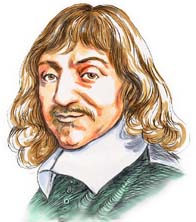
MEDITATIONS
First Meditation
The main question h at Descartes tries to answer in the First Meditation of Meditations is, as is put in the book “What can be called into doubt.” He starts out by declaring that he has does not believe in a lot of that which he used to. To be exact, the phrase is “[s]ome years ago I was struck by the large number of falsehoods that I had accept as true in my childhood and by the highly doubtful nature of the whole edifice that I had subsequently based on them.” (Cittingham, Stoothoff, Murdough; 17). He basically starts to question exactly what he can be certain about and from that point he develops his statement into three ee different types, or levels, of doubts. Concerning level one, he explicitly states that “whatever I had admitted until now as most true I received either from the senses or through the senses”-meaning that it was his senses that were deceiving him into accepting that which he was not real. Yet even the senses aren’t totally deceptive-only a madman would deny his sensual perception that “the hands and this entire body are mine.” In level two he proposes the argument that it is possible that we are just dreaming and that because our reality is a dream it cannot be reality. What we perceive, our entire universe and our existence within it, are just figments of someone or something’s imagination conjured up while dreaming. To this he answers that if we are in a dream, we can believe that the things that exist in our reality exist, to some extent, in the real world as well. In the final level of doubt he discusses the idea that God or some other being (demon) could be deceiving us.
First Meditation
The main question h at Descartes tries to answer in the First Meditation of Meditations is, as is put in the book “What can be called into doubt.” He starts out by declaring that he has does not believe in a lot of that which he used to. To be exact, the phrase is “[s]ome years ago I was struck by the large number of falsehoods that I had accept as true in my childhood and by the highly doubtful nature of the whole edifice that I had subsequently based on them.” (Cittingham, Stoothoff, Murdough; 17). He basically starts to question exactly what he can be certain about and from that point he develops his statement into three ee different types, or levels, of doubts. Concerning level one, he explicitly states that “whatever I had admitted until now as most true I received either from the senses or through the senses”-meaning that it was his senses that were deceiving him into accepting that which he was not real. Yet even the senses aren’t totally deceptive-only a madman would deny his sensual perception that “the hands and this entire body are mine.” In level two he proposes the argument that it is possible that we are just dreaming and that because our reality is a dream it cannot be reality. What we perceive, our entire universe and our existence within it, are just figments of someone or something’s imagination conjured up while dreaming. To this he answers that if we are in a dream, we can believe that the things that exist in our reality exist, to some extent, in the real world as well. In the final level of doubt he discusses the idea that God or some other being (demon) could be deceiving us.
Subscribe to:
Posts (Atom)