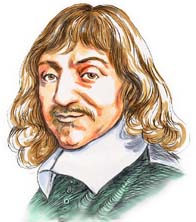
DISCOURSE ON METHOD
Part Six
Descartes declares that although he does not like to publish his views, he feels that, after seeing the success of his previous works that by getting more published his writing would be a great benefit to the general human population if his works were made public and written in vernacular. He hopes that in doing this work others will feel encouraged to do similar work as well. He hopes that many specialists would aid him. Although he is cautious and says that these people will not be driven by the love of the intellectual pursuit but rather the desire for money. He however decides not to publish his work, and cites the reason being how someone else’s work on the same subject he wants to write about was treated. He wants his work to be published after his death so that he doesn’t have to be interrupted from doing his work. He declares that all his success has been due to overcoming six obstacles in his path, and he, if left uninterrupted, would be able to tackle all the other problems if left free form controversy.
Objections were raised that if published, people would try to find errors in Descartes works and that they might be successful in doing so. He answers this by saying that he has never confronted any plausible objection that he had not already anticipated. He also feels that other people can help develop this discussion more.
What is really necessary in understanding Descartes’ work, he says, is not to say what one is not. Don’t profess to be knowledgeable when you are ignorant. Admit that you are ignorant and try to gain knowledge. But at the end, according to Descartes, those people who want to gain knowledge, will create their own investigations.
It is for these aforementioned reasons, namely staying away from the public eye, that Descartes decided not to publish his work on physics three years ago. He changed his mind for two reasons.
They are:
1. To dispel any rumors that his findings are false
2. Because he feels the need to seek help from other scientist. He hopes that people will critically read his works, especially those on Optics meteorology, and geometry